
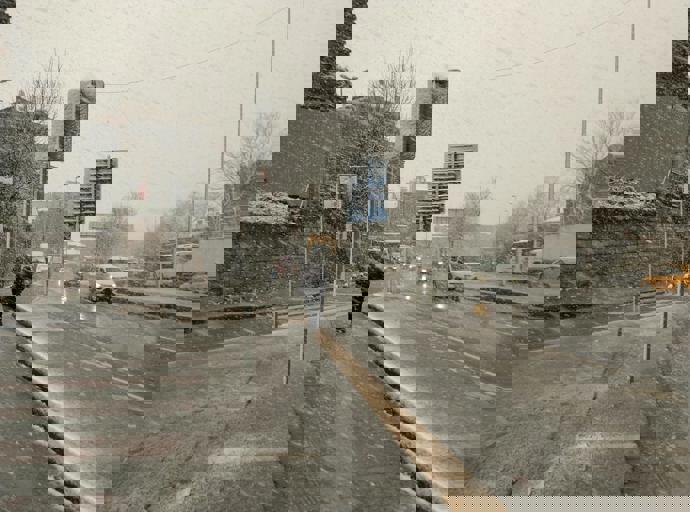
An unexpected and intense snowstorm blanketed the city late Wednesday evening, leading to significant disruption across all major transportation routes. The storm, which brought accumulations well above seasonal averages, proved particularly hazardous for public transit operations. Dozens of buses were caught in the blizzard, leaving both drivers and passengers stranded overnight as conditions worsened rapidly. Commuters found themselves trapped as snow engulfed roadways and visibility deteriorated to dangerous levels.
As the snowfall persisted into the night, transit operators reported that many vehicles became immobilized on roads that had not yet been cleared by municipal plows. For some passengers, what began as an ordinary commute quickly turned into an ordeal as the hours passed without signs of escape. City officials acknowledged that the volume and speed of the snowfall far outpaced their preparations, leaving emergency services struggling to reach those in need.
According to the city’s transit agency spokesperson, up to 15 buses were stranded in various neighborhoods, with an estimated 80 individuals onboard. Many were commuters returning from work, while others included students and elderly residents. “Our priority was ensuring the safety and warmth of everyone stuck on those buses,” said Jocelyn Reid, the agency’s communications lead. “But nature had its own timeline last night.”
Emergency response teams were quickly dispatched to affected routes, but the treacherous conditions hampered their progress. In several instances, snowdrifts and abandoned vehicles further obstructed major roads, making it nearly impossible for rescue crews to reach the stranded buses rapidly. Firefighters, paramedics, and police worked collaboratively, providing updates and reassurance to those awaiting assistance, but the effort stretched resources thin.
Many of those trapped on buses recounted their experiences as cold and anxiety-inducing, but also praised the patience and professionalism of drivers. "People were scared at first, but the driver kept us updated and even handed out bottled water from her own supplies," said Mark Lorensen, a commuter who spent over six hours aboard a immobilized bus. Community spirit emerged among passengers, who shared snacks and phone chargers with each other.
City officials set up temporary warming stations at select community centres once rescue efforts succeeded in evacuating the initial group of stranded commuters. For some passengers, these shelters represented a warm respite after a night spent in frigid conditions. Volunteers from local organizations, including the Red Cross, assisted with distributing blankets, providing hot drinks, and offering emotional support to those shaken by the ordeal.
The snowstorm was characterized by its sudden onset and extraordinary intensity. Meteorologists at Environment Canada noted that up to 35 centimeters of snow fell in less than twelve hours, an amount rarely witnessed in recent decades. “The rapid accumulation and high winds made this a particularly hazardous event,” said weather specialist Helena Chow. Blowing snow and plummeting temperatures added further challenges for emergency personnel.
Transit authorities faced criticism on social media, with some residents questioning the adequacy of the city’s preparedness and response. “We need more robust contingency plans for severe weather,” tweeted one affected passenger. Meanwhile, city officials emphasized their ongoing commitment to reviewing procedures and learning from the incident. "Safety is always our top concern, and we’ll examine every aspect of this response," said Deputy Mayor Randall Zhu.
The snowstorm’s impact was not limited to public transit, as major highways and arterial roads remained impassable well into Thursday morning. Multiple vehicles were abandoned, and tow truck operators worked around the clock to clear routes for snow plows and emergency vehicles. Local businesses opened late, and many schools opted to close for the day, citing safety concerns for students and staff.
Looking ahead, transportation planners acknowledged that this incident may serve as a catalyst for improvements in winter preparedness. Suggestions from community members included equipping buses with emergency rations, establishing clearer protocols for communication with stranded passengers, and increasing coordination between transit, road maintenance, and emergency services during severe weather events.
Public health officials also raised concerns about the risks posed by prolonged exposure in unheated buses, particularly for elderly individuals and those with underlying medical conditions. Emergency department staff treated several passengers for mild hypothermia and anxiety, reinforcing the necessity of rapid response during weather emergencies. Recommendations are being formulated to enhance access to critical supplies on public transit vehicles in the future.
While the storm was a test of both infrastructure and community spirit, many residents expressed gratitude towards frontline workers who laboured through the night. “Everyone who helped deserves our thanks—it must have been exhausting,” said Christina Mendez, a volunteer at a warming station. Stories of drivers, emergency responders, and even fellow passengers helping each other have quickly circulated, offering a bright spot amid the crisis.
In the aftermath of the snowstorm, city officials have pledged to conduct a thorough review, promising transparency and public consultation as they assess lessons learned. A report detailing recommendations for improving transit resilience and emergency readiness is expected in the coming weeks. Until then, residents remain hopeful that better preparation will ensure a swifter, safer response to future weather emergencies, while the city recovers from one of the most disruptive storms in recent memory.